Templates for Organic Recordkeeping
Organic Regulations tell us what information must be recorded. The producer has flexibility in deciding how those records are kept and what formats work best for their operations.
Good recordkeeping supports organic certification and strengthens operation management. While regulations define what must be recorded, producers choose how to keep records in ways that fit their operation.
Written records help track production, inputs, and challenges across the season—and provide reliable information for inspections, planning, taxes, and grant applications.
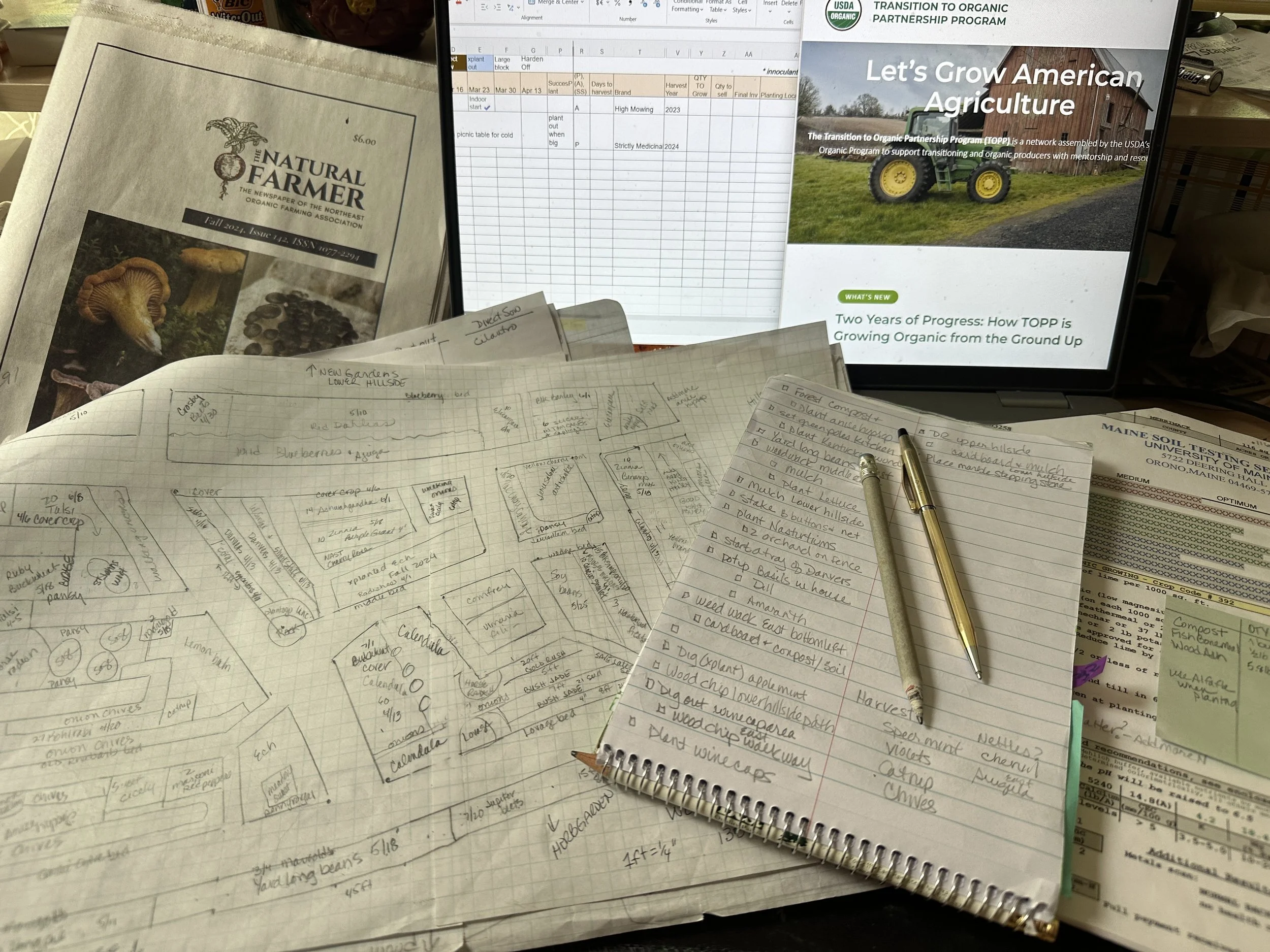
Download any of the templates below to build a simple, flexible recordkeeping system that works for your operation.
Recordkeeping Templates
Many Certifiers offer templates on their websites. Review the templates from your certifier as they are set up for the structure of the Organic System Plan for that certifier.
Below are links to certifiers templates along with the farmer developed templates.
Downloadable Farmer-Developed Templates
DOWNLOADABLE CROP TEMPLATES
Materials List - A spreadsheet by year of materials used
Field History Document - A field history by field for 3+ years
Seed search & purchase list - A seed chart showing various suppliers and purchase
Seed list, starts, location & seed search - A multi-sheet spreadsheet with seeds listed with growing information, starting dates of plants, location in field with quantities planted & seed searches for non-organic seed.
Planting Chart 1 - Planting chart showing what is started, when, and transplanting date
Planting Chart 2 - A planting guide, showing start date, quantity, space and transplant date
Field Plans - a multi-tabbed spreadsheet with an example of a field map, compost log, activity log, pest log, water managements, vehicle log, and fertigation log in each tab
Field Maps - a spreadsheet grid to make maps of the fields and gardens. Includes examples of fields in tabs
Activity & Production Logs - examples for activity, bed prep, pest and disease management, spray log, inventory of seedlings and nursery plants in many tabs in this spreadsheet
Harvest Record - the first tab in this document is a harvest log
Soil Amendment Template - a listing by input and field/bed
These documents are all downloadable and in a format that can be adapted to your needs. When uploaded to the cloud, they become accessible on mobile devices, making real-time data updates easy and efficient.
DOWNLOADABLE LIVESTOCK TEMPLATES
Poultry Worksheet Calculations - A worksheet designed to calculate processed birds and pricing.
DMI Worksheet Calculations - calculations for Dry Matter Intake (DMI) on pasture and for hay season to calculate the amount of hay needed for the winter months.
Additional livestock templates will be added as they are shared with NOFA-NH.
Until then, refer to MOFGA templates, Vermont Organic Farmers Templates, or USDA Templates above.
As more farmer developed templates become available, they will be added to this compilation.
Thank you to the farmers who have taken their time to share their hard work to help farmers develop and improve their recordkeeping. We are all in this together.
To share your templates, please email them to Teresa@nofanh.org
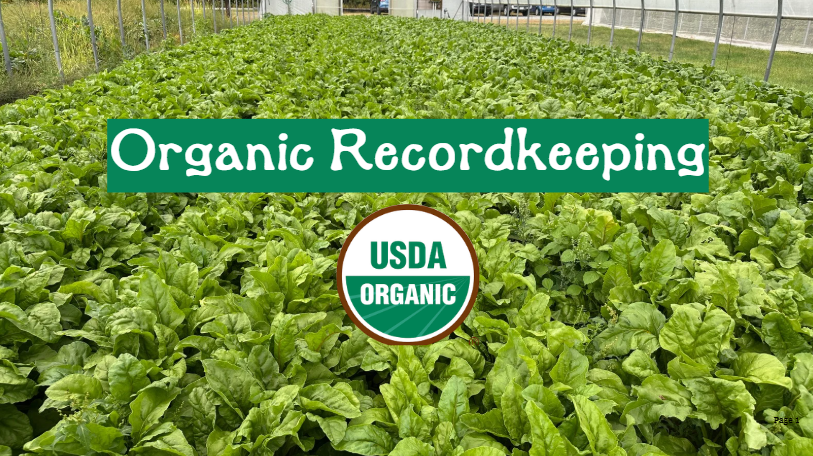
A workshop on Organic Recordkeeping from NOFA-NH’s Winter Conference 2026. This presentation shares these templates as well as regulation behind the records.
Recordkeeping Checklists
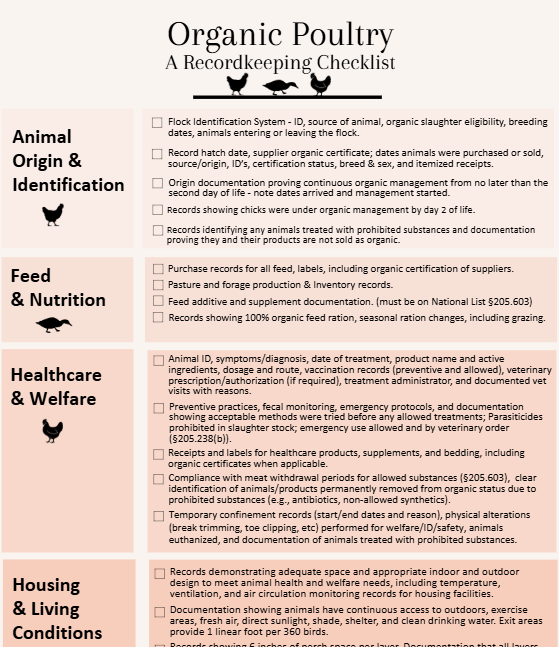
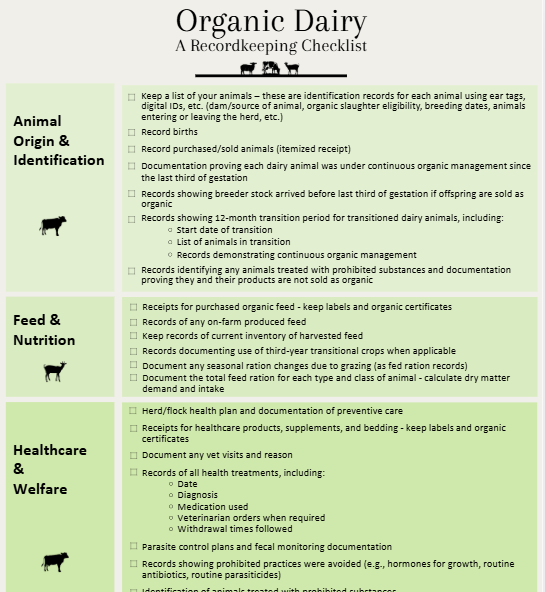
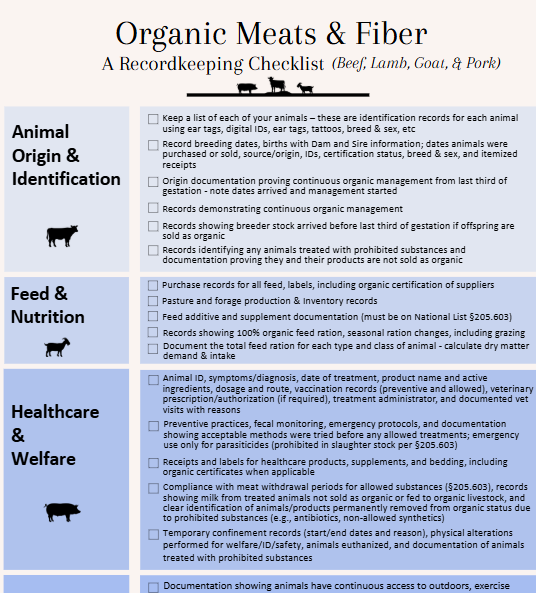
Checklists for Crops, Wild Crops and Processing coming soon!
For more in-depth information on Organic Certification and Certifiers visit:
TOPP
Transition to Organic Partnership Program
TOPP will provide valuable services to farmers in the Northeast through:
Farmer-to-Farmer mentorship programs
Technical Assistance
Resource development
Community building opportunities and networking with peers
Help producers overcome technical, cultural, and financial shifts during and following certification
Engage educational and training institutions (including crop advisors and extension agents) on organic workforce training and education, and future human capital planning.
Insight from a NH Mentor:
"As neighboring farmers a sense of collaboration is emerging, that gives me great hope. Being a farmer is hard, and we are definitely stronger and more resilient together.”
Insight from NH Mentor:
"I did a visit of his [Mentee] fields as well and was able to understand his vision for the farm. It is inspiring to see folks in their 30's understanding the value of following organic production methods to supply healthy nutritious food to our surrounding community. After our field visit we sat down at a computer to go over record keeping methods and crop planning. Particularly how to incorporate organic methods within the crop plan."

Organic Technical Assistance
Technical Assistance can look many ways:
TOPP Mentorship
Attending Organic Support Hours
One-to-one organic advising from NOFA-NH
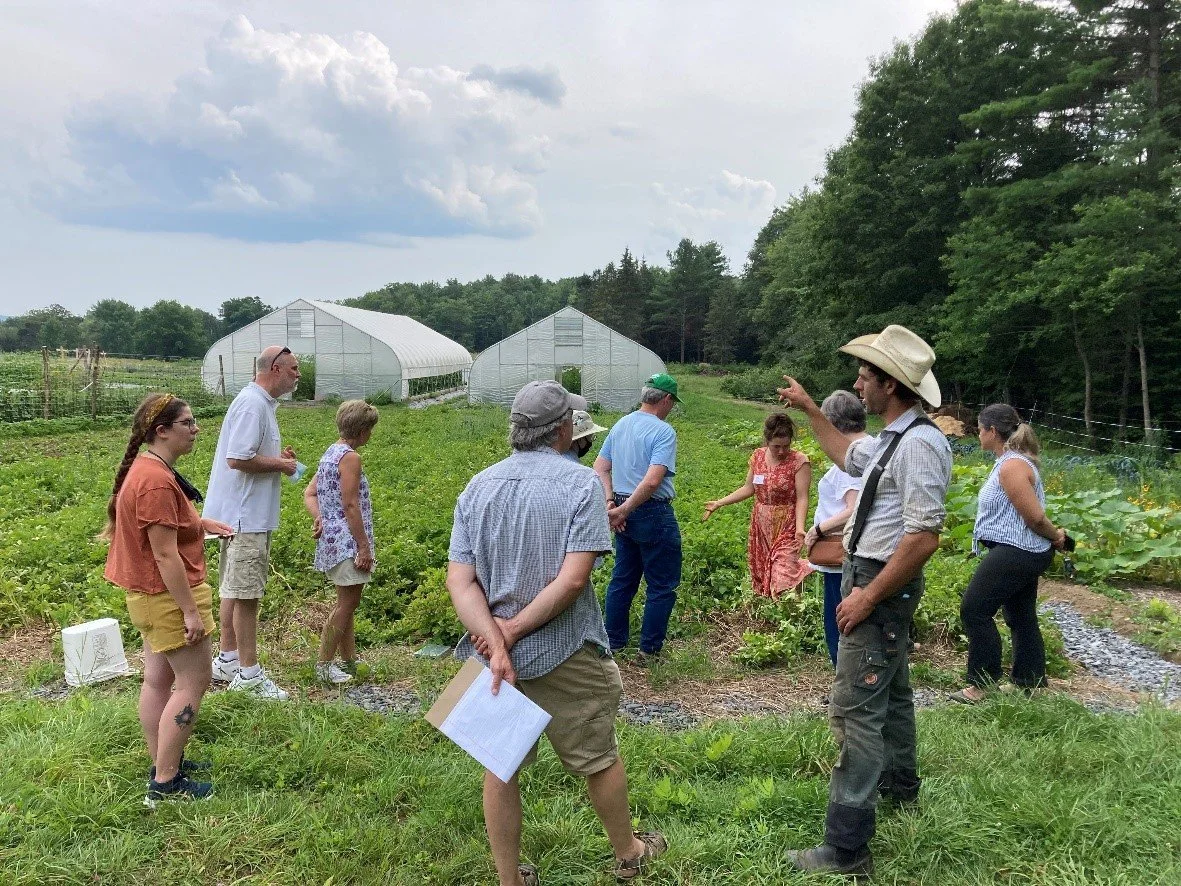
Attending Field Days and Educational events
Help with recordkeeping and Organic System Plan
Stay in Touch with NOFA-NH’s Farmer Newsletter
Sign up for the Farmer Newsletter to stay up to date with organic farming in New Hampshire. Receive monthly resources, farmer activities & opportunities, and have connection with the organic farming community!
Organic Support Hour
Interested in Organic Farming? Are you curious about what it takes to grow under organic regulations? Want to better understand the organic standards or how your current practices might align? Join us every Wednesday at 1PM for open office hours with open discussion and Q&A session! We'll cover your questions first, then we can cover the basics of organic production, help you navigate the regulations, and explore what organic really means—and what it doesn’t. Whether you're just starting out or already using organic practices and want to know about the organic food you eat, this is a space to ask questions, share ideas, and connect with others on the journey.