Workshops and Keynote
2026 Conference Workshops
9:45AM Welcome
Workshop Session I
10:15-11:15AM
-
Instructor: Dan Birnstihl, Rimol Greenhouse Services
Content Level: Beginner-IntermediateA high tunnel is a major investment for any grower, but one that can quickly pay off with a strong return on investment (ROI). This workshop will provide calculations on the typical ROI of a high tunnel and offer practical strategies for increasing return on investment. This includes growing different crops and varietals that can yield more profits, investing in upgrades or automation for the tunnel, or even growing through the winter.
Dan Birnstihl leads Inside Sales and Customer Service at Rimol Greenhouse Systems. After serving in the U.S. Marine Corps, Dan attended UNH to earn his degree in Sustainable Agriculture and Food Systems. He worked as the Farm Director at Hip Peas Farm before joining the Rimol team in 2022.
-
Instructor: Chad Cochrane, NRCS NH
Content Level: AdvancedWhile soil organic matter is widely recognized for improving soil health, its role in carbon cycling is far more complex and dynamic. This advanced session explores how soil organic matter is measured, how carbon is stabilized, transformed, and utilized by soil microbial communities, and how these processes influence nutrient availability, water dynamics, and crop performance. Participants will examine management strategies to intentionally build and manage soil carbon, including targeted use of amendments such as compost and biochar, with an emphasis on practical, farm-scale decision-making.
Chad Cochrane is the State Agronomist for the USDA-Natural Resource Conservation Service. He works statewide promoting conservation agronomy, sustainable agricultural practices, and soil health management systems. Chad has been a lead supporter and promoter of no-till planting methods, the use of cover crops, and irrigation water management on all sizes and types of farms.
-
Instructor: Ridge Shinn, Northeast Grass-fed Beef Initiative
Content Level: Intermediate-AdvancedThe Regenerative Grazing talk will focus on economic viability of grazing, creating 3-6 times more biomass per acre, improved animal health, and reproduction. This talk will also cover how management of the solar collector (grass) with ruminants creates consistent high-quality meat. Ways to economic success with grazing includes calves in sync with nature that will winter graze and use limited structure to avoid concentration of nutrients. Success is measured by evidence of rumen function (manure quality). Economic success with adaptive multi-paddock (AMP) grazing also creates resilience and combats drought and flooding.
Ridge Shinn is the Executive Director of Northeast Grass-Fed Beef Initiative (NGBI). NGBI recently received a Henry P. Kendall Foundation grant to support their collaborative work at Vermont State University in establishing a grass-fed beef supply chain for VTSU cafeterias. NGBI has also submitted a 24-credit Regenerative Grazing curriculum to VTSU. Ridge has been a leader in the shift from feedlot production to raising cattle on a diet of 100% grass and forages. His work has been recognized in Time Magazine, Atlantic Monthly, New York Times, Wine Spectator, and Smithsonian.
-
Instructor: Paul Doscher, Windcrest Farm
Content Level: Intermediate to AdvancedCut-your-own Christmas trees can provide a reliable off-season income stream for small organic growers while making productive use of land that may be less suitable for food crops. This workshop explores how Christmas tree production can fit into a diversified organic farm system. Participants will learn how to select appropriate tree species for their climate and soils, and how to manage fertility and site conditions organically. We will also cover common pests and diseases and effective organic strategies for prevention and control. Whether you are considering adding Christmas trees to an existing farm or starting a new enterprise, this session will offer practical, experience-based guidance for long-term success.
Paul Doscher and his family have been organic growers for more than 45 years. They originally started a modest market garden, selling from the farm and at farmers markets. In 1986 they were awarded the “Organic Gardener of the Year” by the Rodale Press. They began growing Christmas Trees in the late 1980s, opening a cut-your-own operation about 30 years ago. The farm hosted about 3 acres of trees, and was entirely operated by the family. They retired the commercial Christmas Tree operation in 2025. Paul is a former professor of environmental science and land conservation professional with the Society for the Protection of NH Forests.
-
Instructor: Maria Noël Groves, Wintergreen Botanicals
Content Level: Beginner-IntermediateSo many wonderful herbs to heal the gut and enhance digestion can be grown in the garden or foraged from the wild. Maria will focus on a handful of favorite herbs from her newly released Herbal Gut Health book that benefit various aspects of digestion. These will include marshmallow, dandelion, fennel, plantain, and catnip. Learn how to make simple, delicious recipes like gut-healing teas, powder blends, carminative glycerites, and digestive bitter tinctures or oxymels with local, organic plants.
Maria Noel Groves is a clinical herbalist who runs Wintergreen Botanicals Herbal Clinic and Education center in Chichester, NH. She is the author of the award-winning, best-selling Body into Balance: An Herbal Guide to Holistic Self Care, Grow Your Own Herbal Remedies, Herbal Remedies for Sleep, Herbal Gut Health.
-
Instructor: Anna Hubbard & Cam Huftalen, Vital Communities
Content Level: BeginnerOver the past year, Vital Communities has been developing resources and programming to build and nurture Farm to Early Childhood Education programs in the region. In this presentation, Vital Communities will provide an overview of what Farm to Early Childhood Education is, how it benefits both children and local growers, and what resources and opportunities are available for local farmers to become more engaged with Farm to Early Childhood Education. The presentation will highlight tools that Vital Communities has developed, such as an interactive map and curricula focused on early-age agricultural literacy, as well as various ways farmers can engage with local early childhood education programs through food procurement and educational opportunities. The session will conclude with a roundtable discussion aimed at sharing attendees’ experiences with Farm to Early Childhood Education and exploring hopes for how participants can help sustain and build on the momentum this field has generated in recent years, ensuring that local farmers continue to be supported.
Anna Hubbards background is in applying systems-based thinking to land conservation and permaculture design/installation throughout the Monadnock and Upper Valley Regions. Since joining the Vital Communities team, they have focused on Farm to School, Farm to Early Childhood Education, and general support for Upper Valley food producers.
Cameron Huftalen has a background in cultivating resilient local food systems, previously working with the Kearsarge Food Hub in Bradford. Over the past several years at Vital Communities, they have worked to connect local farms and farmers to community members and food access programs and supported grassroots coalition building amongst hyper local community food projects.
-
Instructor: Akilah Z. Campbell, Zuri Wingi
Content Level: All LevelsThis workshop explores how African Diasporic and Indigenous agricultural traditions shaped New England’s food system and continue to nourish communities today. Participants will learn about the ecological knowledge, seed keeping, and community care practices that sustained these populations for generations and laid the groundwork for sustainable agriculture in the region. We will also highlight how the different projects in the area are carrying this legacy forward through heritage crop cultivation, education, mutual aid, and collaboration. Through storytelling, historical grounding, and hands-on engagement, attendees will gain insights into culturally rooted agricultural practices and how to integrate them into their own farms, gardens, and/or community work.
Akilah Campbell has over 15 years of experience in farming, teaching, curriculum & program development, and community organizing. She is a former cofounder of a community center that focused on farming education, food justice, and social justice issues, where she developed and implemented programs in these areas. She has also worked at the national level to help farmers who are Black, Indigenous, and Other People of Color with technical assistance to promote farm and food systems resiliency in their local communities and regions. Akilah is currently working on the Zuri Wingi Heritage Harvest Project at Tuckaway Farm in Lee NH to bring crops and agricultural education from the African Diaspora and Indigenous Populations to the region. She is also a member of Durham's Wagon Hill Farm & Garden where she was the Education and Community Outreach Coordinator, a Board Member, and a Food Pantry Volunteer. She earned degrees in Wildlife Management/Ecology and Music Education from the University of New Hampshire, and is currently pursuing a M.S. in Natural Resources and the Environment.
-
Instructor(s): Ally Lynch & Allison Bussiere, Gather
Content Level: All LevelsGather’s Community Food Center model goes beyond emergency food distribution, creating a welcoming hub where individuals and families can access nutritious food, build skills, and connect to resources that support long-term food security. This session will provide an inside look at how Gather has developed and expanded its Community Food Center to meet evolving community needs while strengthening connections across the local food system. Participants will learn how Gather integrates pantry services, prepared meal, culinary and gardening education, and partnerships across the food system into a coordinated, community-centered approach. The session will also explore how local food access fits within this model through purchasing from regional producers, gleaning, and collaboration with farms and community partners to increase access to fresh, locally grown foods.
We’ll share insights on growth, operational challenges, and lessons learned in building and sustaining a multifaceted Community Food Center. Through facilitated discussion, participants will exchange ideas, explore common challenges, and consider how elements of this model can be adapted in communities across New Hampshire. Attendees will leave with practical strategies, new connections, and inspiration for strengthening community-based food access.
Ally Lynch joined Gather in 2023 with a background in hunger relief, having previously worked with an international nonprofit focused on addressing global hunger and malnutrition. After starting a family, Ally followed her passion for the outdoors and local food by working on a four-season vegetable farm in South Hampton, NH. That experience deepened her commitment to locally sourced food and expanding access to fresh, nutritious produce within the community. At Gather, she helps strengthen connections between local farms and food access programs through gleaning, gardening, and community partnerships. Outside of work, Ally enjoys cooking, gardening, woodworking, and spending time with her family.
Allison Bussiere first connected with Gather as a volunteer in 2013, inspired by its collaborative, community-based approach to strengthening food access on the Seacoast. After years of involvement with Cooking 4 Community and local food initiatives, she joined the staff in 2022 to coordinate the Seacoast Food Providers Network and now serves as Food Systems Coordinator, working across local and statewide partnerships to build a more resilient, connected regional food system. Her work centerson programming that expands access to fresh, local food. Today, Allison’s work centers on strengthening community food access through Gather’s Community Food Center. She works at the local, regional, and state levels to build partnerships, share resources, and expand access to fresh, locally grown food across the Seacoast and beyond.
Workshop Session II
11:30AM-12:30PM
-
Instructor: Teresa Downey, NOFA-NH TOPP
Content Level: Beginner-IntermediateEffective recordkeeping is the backbone of a successful and compliant organic operation. Join us for an engaging, in-depth discussion with practical tips, tools, and ready-to-use templates to simplify and streamline your recordkeeping.
Designed for organic producers, this session explores a range of technologies, from simple clipboards and customizable templates to digital tools, to capture data efficiently and in real time. Learn strategies for recording information as you work, ensuring records are accurate, complete, and easy to maintain for organic certification and informed business decisions. You’ll see real-world examples from New Hampshire farmers (bring yours to share!), including documents, apps, and low-tech solutions currently used in the field. We’ll also highlight how TOPP can support you in building or refining a recordkeeping system that helps you develop your Organic System Plan and prepare for inspection. Representatives from regional certifiers will be available to answer questions. Leave with practical tools you can use right away and a clearer path toward recordkeeping that supports both your operation and certification goals.certification goals.
Teresa Downey is the NOFA-NH Transition to Organic Partnership Program Coordinator. She has a background in computer software technology, office management, farm management and local food markets. Teresa has been involved with local food for 35 years, both as a farm hand, farm manager, local food markets manager, farm owner, local food procurement and as an avid foodie. She is passionate about social transformation to a just and equitable world, service to humanity and creating food systems that benefit and serve the needs of humanity and the environment using nature as a guide. She homeschooled her four children. She lives on her 7-acre certified organic farm, with her husband and border collie, growing edible flowers, herbs and producing value-added products from the farm harvests.
-
Instructor: Steven Roberge, UNH Extension
Content Level: Beginner-IntermediateThis workshop provides an overview of the Adaptive Agroforestry Principles and Teaching (ADAPT) initiative, which supports the development of climate-smart strategies to expand agricultural production in New England while maintaining forest ecosystem services, farm viability, and community health. The session focuses on agroforestry as an intentional land management approach that integrates trees with crops and/or livestock to deliver multiple environmental, economic, and social benefits. Participants will learn about ADAPT’s three core pillars—research, education, and extension—and how they work together to support farmers, educators, and land managers responding to climate challenges. Regionally relevant agroforestry practices and examples from applied research and outreach efforts will be discussed.
Steven Roberge is the State Extension Forester at the University of New Hampshire. In this role he oversees the system of county Extension foresters, coordinates outreach to forest owners and professionals and implements the State’s Forest Stewardship Program. Steve and his team provide stewardship options for forest owners to help manage the state’s private forestland. Steve earned a B.S. in Forest Science from the UNH and a Masters of Forest Science from Yale University. He currently serves as a CO-PI on the ADAPT team, coordinating agroforestry outreach.
-
Instructors: Catherine Coverdale (Xerces Society), Jonathan Hayden (Winter Street Farm), & Sue Greene (Slopeside Farm)
Content Level: Intermediate-AdvancedFind out how New Hampshire farmers are putting the concepts of Integrated Pest and Pollinator Management (IPPM) into action on their organic operations! Rather than just theory, you’ll hear about the real practices they’re using, what worked, what didn’t, and how they’re protecting pollinators while keeping pests in check. This will be combined with research-based evidence that emphasizes the importance of IPPM in supporting sustainable and diverse agroecosystems.
Catherine Coverdale is a Pollinator Conservation and IPM Specialist with The Xerces Society and a USDA-NRCS Partner Biologist. Catherine provides technical assistance on pollinator conservation and integrated pest management for New Hampshire farmers and land stewards.
Jonathan Hayden has been farming for nearly 15 years. He and Abby settled in Claremont, NH and started Winter Street Farm in 2020 during the pandemic. Winter Street Farm is a small diversified Organic CSA farm intensively managing under 2 acres to feed upwards of 150 members alongside a retail farmstand, compost operation and laying flock. The farm focuses on sustainability and resilience with no-till regenerative farming methods and works closely with the community.
Sue Greene is the owner and farmer of Slopeside Farm in Coös County, Lancaster, NH. Sue started Slopeside Farm as a small certified organic veggie farm at the Lancaster Farmers' Market 6 seasons ago. She has expanded into growing and selling veggies, herbs, and cut flowers for her wholesale, CSA, and retail markets. Sue has a background in biology and was in healthcare prior to farming, so she gets pretty nerdy when it comes to insects, pests, and IPM tools.
-
Instructor: Sarah Gilliatt, Main Street Cheese and NOFA-NH
Content Level: BeginnerAs food prices and the affordability crisis are central in public discourse, there are tremendous opportunities to put forth visions for life-affirming economic systems. Sarah will provide a big picture analysis from colonialism to this moment, providing alternative visions such as parity pricing and the Earth for All agenda. Such an agenda can start to bridge political divides and Sarah will suggest some ways of having such conversations. She will also discuss possible electoral projects that could be undertaken here in NH around agricultural economics and their wide-ranging implications on the pressing issues before us.
Sarah Gilliatt founded and manages Main Street Cheese, LLC in Hancock, NH. She holds a degree in Philosophy from UC-Berkeley and an MA in Socially-Engaged Buddhism. She has a global perspective, having studied and worked over many years with several leading global south and “south-within-the north” activist-scholars contesting globalization and promoting economic localization. In 1999, Sarah led a Buddhist Peace Fellowship delegation to the WTO Battle in Seattle, which contested neoliberalism and the “free” trade agenda. She is a NOFA liaison to the National Family Farm Coalition and more recently the HEAL Food Alliance. This past September, Sarah was a Delegate to the Third Nyéléni Food Sovereignty Forum in Sri Lanka.
-
Instructor: Ayn Whytemare, Found Well Farm
Content Level: BeginnerUsing native plants in the home landscape is all the rage, but it is not as simple as swapping out the usual suspects for native counterparts. By understanding a few simple ecological concepts such as succession, diversity of species & structure, and disturbance regime you can find the right place for the right plant and save yourself time & money as well as having the best possible landscape as fast as possible. Understand the importance of the original ecosystem type as well as soil to have the biggest benefit for climate mitigation as well as helping nature become more resilient with climate change.
Ayn Whytemare is the owner of Found Well Farm, a native plant nursery since 2008. Ayn has a BA in Environmental Science from Barnard College, and MS in Forest Ecology from University of Washington. Previous owner of Ecological Landscape Gardening.
-
Instructor: Marsha Campaniello
Content Level: Beginner-IntermediateLearn easy to achieve, home-scale food preservation techniques for personal use and family self-sufficiency, including fruits, vegetables, herbs, and mushrooms, from someone who has been doing it for over 50 years while raising a family and maintaining full-time careers. Whether you have only one or two excess crops or are eager to fill both pantry and freezer to feed your family year-round, you will walk away with lots of practical know-how. This workshop will guide you using non-fancy equipment for canning, freezing, and drying, while sharing plenty of tips for successful processing at home. Equipment will be on display, along with recipes and a few yummy samples to be shared. NOTE: This presentation focuses on food preservation for home use and personal self-sufficiency and, while it emphasizes food safety measures, it will not include USDA commercial use requirements.
Marsha Campaniello practices organic gardening on her ¼-acre site that includes over 240 varieties of vegetables, herbs, fruits, shrubs, trees, grasses, ferns, mushrooms, and more. Through careful design and sustainable practices, she has created a vibrant, eco-friendly space utilizing many permaculture principles. She has shared her expertise and passion with the community through permaculture presentations and hosting numerous garden tours.
-
Instructor: Dave Trumble, Good Earth Farm
Content Level: Beginner-IntermediateJoin us for a practical workshop on growing organic seedlings. The workshop will cover greenhouse structures, planning and crop schedules, greenhouse management, crop basics, variety selection, and growing tips for flowers, vegetables, and herbs. We will look at organic certification and seed choices. We will explore compost-based potting soil, watering, germination, temperatures, and ventilation. In addition to production, we will explore different ways to market and sell seedlings based on real world experience. Topics will include wholesale sales to farmers and stores, direct sales from the greenhouse, pre-order systems, online ordering, and limited seasonal public sales. We will also discuss alternative distribution approaches such as donating seedlings to food pantries, working with schools, and partnering with community organizations. Throughout the workshop, we will connect growing decisions like timing, quality, and variety choices to marketing and sales. The workshop will also highlight the personal side of selling seedlings, including building long term relationships, supporting gardeners, and strengthening community.
David Trumble is the owner and farmer of Good Earth Farm. Good Earth Farm grows organic seedlings in four greenhouses and has been producing certified organic seedlings for nearly 40 years, serving both home gardeners and farmers for the past 30 years.
-
Instructor: Olivia Saunders, UNH Extension and Northeast SARE
Content Level: AllClimate change is already shaping day-to-day decisions on farms, from planting and harvest timing to water management, soil health, and pest pressure. This facilitated discussion is designed to create space for farmers to share what they are seeing on their own operations and how they are responding. Participants will hear directly from peers about climate-related challenges, management practices, techniques, and on-farm trials aimed at adapting to changing conditions. The session will emphasize open dialogue, shared learning, and practical problem-solving rather than formal presentations. Together, farmers will exchange ideas, reflect on what is working (and what isn’t), and brainstorm strategies to build resilience in their operations. This discussion is ideal for farmers looking to learn from others’ experiences, connect with peers, and explore adaptive approaches grounded in real-world farming conditions.
Olivia Saunders, an agricultural field specialist at UNH Cooperative Extension, is a 2016 national SARE Fellow and a participant in the Climate Adaptation Fellowship by the northeast climate hub and UMaine Extension. Specializing in climate change, soil health, and farmer mental health, Olivia serves as the SARE Professional Development Program Coordinator. She joined UNH Extension in 2013.
(LUNCH AND ACTIVITIES)
Workshop Session III
2-3PM
-
Instructors: Nicole Cardwell & Colleen Jennings, NH Food Alliance
Content Level: AllWhat is the New Hampshire Food and Agriculture Strategic Plan—and how can you help move it forward? Join the NH Food Alliance team for an interactive workshop introducing the plan’s goals, sharing updates on progress, and exploring opportunities to engage through newly launched workgroups and as an official Participating Partner. Come ready to engage, collaborate, and chart your role in building a more resilient food system.
Nicole Cardwell, NH Food Alliance’s Director, guides day-to-day operations and cultivates greater connectivity and alignment across the statewide food systems network. Before joining the NHFA, Nicole oversaw strategic initiatives for Bon Appetit Management Company nationally. Nicole has a Bachelor of Business Administration from UMass Amherst and a Master of Environmental Management from Duke University. She’s worked on agriculture and food systems issues from a variety of perspectives, including international conservation organization Rainforest Alliance, the Massachusetts Farm to School Project, Natural Resources Defense Council, World Wildlife Fund and Union of Concerned Scientists. She lives in Durham and can usually be found at the pottery studio, gardening, or biking around town.
Colleen Jennings is the Network Coordinator for the NH Food Alliance. She is a contributing author of the Direct-to-Consumer & Consumer Education brief for the NH Food & Agriculture Strategic Plan. Colleen started her career working for independent local food and lifestyle publications in New York’s Hudson Valley, while obtaining her Master’s degree. Early in 2020, Colleen moved from the Hudson Valley to New Hampshire and started working as the Communications Coordinator for the NH Food Alliance, as well as the Market Manager at the Salem NH Farmers’ Market. In her role, she is focused on organizing opportunities for networking, as well as educational and promotional programs all in support of New Hampshire’s farmers, food businesses, and food system.
-
Instructor: Jimi Tutor, Clyde Farm
Content Level: IntermediateDrawing on his experience at Clyde Farm, a certified organic operation in New Hampshire, Jimi will share practical approaches to managing poultry, ruminant, and pig manure through holistic, nutrient-cycling systems. The session will cover housing, feeding, and bedding strategies that support animal health and efficient workflows, along with manual and mechanized manure removal, composting, and spreading. Barn and composting facility design, seasonal clean-out strategies, and labor considerations will be discussed with an emphasis on efficiency and protecting water and air quality. Composting methods, nutrient stabilization, and best practices for manure and compost application based on crop needs will round out the workshop. Ideal for farmers, small-scale livestock keepers, and land stewards seeking more sustainable and effective manure management systems.
Jimi Tutor and his partner Kristen have owned and operated Clyde Farm for 8 seasons. They currently raise broilers, turkeys, pigs, cattle and sheep in addition to managing 100 acres of woodland and a small vegetable CSA. The last 6 seasons they have been focusing on regenerating the 30 acres of pasture and building infrastructure on their new-to-them property in Farmington, NH.
-
Instructors: Nancy & Gracie Phillips, Heartsong Farm & Lost Nation Orchard
Content Level: Beginner-IntermediateOutrageous diversity is one of the tenets of holistic orcharding and gardening. Incorporating healing herbs into your garden and orchard can enhance both the aesthetic and health of your plants. Herbs like comfrey, mountain mint, yarrow and calendula, nettles (and more) not only provide medicinal benefits but also attract beneficial insects and improve soil health. We look forward to sharing how and why to interplant healing herbs in your gardens and orchard. Also learn how to use the herbs and herbal teas for enhancing health for plants, people, and animals.
Nancy Phillips is a community herbalist, educator, and holistic farmer/orchardist. She and her late husband, Michael, co-authored The Herbalist Way: The Art and Practice of Healing with Plant Medicines and lovingly tended Heartsong Farm & Lost Nation Orchard—an herb farm, organic apple orchard, and holistic educational center—for over 35 years. Today, Nancy manages the farm with the help of her daughter, Gracie, and together they offer herb and orchard apprenticeships, farm internships, workshops, grower intensives, and healing retreats.
Gracie Phillips is a home herbalist, gardener, and lifelong student. She currently lives and works on her family’s apple and herb farm where she grew up, Heartsong Farm & Lost Nation Orchard, in northern New Hampshire. She helps manage the gardens and orchards as well as hosting and teaching educational programs about herbalism, orcharding, and sustainable living. She is deeply committed to continuing to learn and grow her own knowledge of the plants, and to find ways to share her knowledge and passion for herbs and the earth with others.
-
Instructor: Laurie Lockwood
Content Level: IntermediateWhether you're gardening for vegetables, growing a food forest, or rewilding an area, you can use cheap, local materials and powerful most valuable plants (MVPs) to build stability in the face of climate change. The right materials, techniques, and plants will build complex, stable, and productive systems that regenerate and protect soil, feed and heal the gardener, and deter pests while supporting pollinators and wildlife. This workshop will equip you with practical tools and plant allies to design resilient systems that thrive in a changing climate.
Laurie Lockwood lives, gardens, and grows fruit in Canterbury, New Hampshire, on land that has been farmed for over 200 years. Addressing site deficiencies led her to permaculture, and from there to richer soil and healthier plants. She loves guiding others to the joy of a deepening relationship with Nature.
-
Instructors: Jake & Cassie McCormack-LaShier (Blaisdell Hill Farm) and Leon Malan
Content Level: IntermediateThis workshop offers a glimpse into how one can start a farm in New Hampshire. Two years ago we began the journey to start our own farm. Today, we have a half acre market garden under intensive vegetable production that supplies several markets and a CSA with our produce. We will discuss what we learned along the way- discussing access to land, lease agreements, planning and design, finding markets for produce, and more. We will point out lessons learned, successes, and where we failed in an interactive session.
Jake and Cassie McCormack-LaShier founded Blaisdell Hill Farm in 2024 after working in the local food system for the last 5 years. What started as a farm apprenticeship in 2021 with the Kearsarge Food Hub turned into Cassie becoming the Food Access Manager at Sweet Beet Market, and Jake becoming the Production Coordinator at Sweet Beet Farm. Over these years, both learned how to grow and distribute produce to the local community, discovering the value that nutritious, organic produce holds. Blaisdell Hill Farm aims to be a small-scale local farm that utilizes regenerative practices to demonstrate that farming can be sustainable for the farmer, the land, and the community that surrounds them.
Leon Malan has spent over 30 years as a college professor, inspiring many individuals to listen and interact with the environment around them. His class discussions and lectures demonstrate that humans are an integral part of ecological systems. He utilizes the teachings that can be found in nature to guide his lessons, providing students a sense of place with the world around them. Blaisdell Hill Farm, and other local farms, provide the perfect environment to demonstrate where people fit in these ecological systems, and how we can integrate practices that will provide a sustainable future for our food system.
-
Instructor: Amber Vinchesi-Vahl, Ph.D., UNH Extension
Content Level: Intermediate-AdvancedAs New Hampshire’s climate continues to shift, insect pest pressure is changing in ways that directly affect specialty crop production. Warmer winters, altered precipitation patterns, and longer growing seasons are influencing pest survival, movement, timing, and behavior. This session will focus on current and emerging insect pest trends observed on New Hampshire farms, with an emphasis on how climate conditions are shaping what growers are seeing in the field. We will explore examples of pests expanding their range, increased pest generations, and pest ability to overwinter up north--all of which contribute to management challenges. The session will also focus on new and emerging invasive species that growers should be aware of. The session will also highlight UNH Extension IPM resources, including the statewide trapping network, IPM reports, and text-based services, and how growers can use these tools to support timely, informed decision-making.
Dr. Amber Vinchesi-Vahl is the Extension State Specialist for Entomology and IPM at the University of New Hampshire. Prior to joining UNH Cooperative Extension, Amber spent seven years as a Vegetable Crops Advisor for University of California Cooperative Extension, developing a research and extension program for vegetable farmers and pest control advisers in northern California, mainly working with processing tomatoes and muskmelons. She holds a B.S. in Entomology from Purdue University and an M.S. and Ph.D. in Entomology from Washington State University. Amber also has experience with insect-vectored diseases of potatoes from a postdoctoral fellowship in Oregon and conducted her graduate work on a native pollinator important to alfalfa seed production in Washington state.
-
Instructor: Hannah Bendroth, Coppal House Farm
Content Level: Beginner-IntermediateThis relaxed, informative workshop helps you explore whether agritourism could be a good fit for your farm or business. We’ll discuss simple starting points, common considerations, and ways to align agritourism ideas with your goals. Using Coppal House Farm’s journey as a real-world example, we’ll share behind-the-scenes insights into how a small family farm began welcoming visitors through experiences like a corn maze, horse-drawn rides, and sunflowers. We’ll highlight pivotal moments and lessons learned along the way, including what worked, what required adjustment, and what we wish we’d known earlier. You’ll learn how agritourism can strengthen a farm’s future while building meaningful connections with the community. Participants will leave with a clearer sense of what’s possible and how to take an approachable first step into agritourism.
Hannah Bendroth, General Manager at Coppal House Farm, returned to the area in 2019 and fell in love with farming. With a background in event planning, she leads the farm’s agritourism events and visitor experiences. Passionate about the sheep and dedicated to her family’s legacy, she’s excited to help guide the farm’s future.
Panel
3:15-4:15PM
-
Moderator: Hanna Flanders, Kearsarge Food Hub
Panelists: Dr. Melissa Grella (Taproot Marketplace), Amanda Fisher-Katz-Keohane (Mount Washington Valley Farmers Market), Michael Faber (Monadnock Food Co-op), Nicole and Jeremiah Vernon (Vernon Family Farm)This panel explores how local market access points move from idea to reality through the efforts of communities, organizations, and businesses committed to supporting local producers. Panelists representing a cooperative, food hub, marketplace, farmers market, and farm store will reflect on the formative years of their operations and the early decisions that shaped their development. The discussion highlights how these models emerged in response to community needs and producer opportunities, and what it took to build trust, infrastructure, and participation along the way. Panelists will share insights into translating concepts into functioning markets and adapting initial visions into workable systems. The conversation will address how organizations balance growth, financial viability, and mission alignment over time. Panelists will also reflect on challenges that continue to shape their work today. Throughout the discussion, the emphasis remains on expanding economic opportunities for local producers and strengthening community access to quality, healthy local food.
Hanna Flanders is co-founder and Director of Community Engagement at the Kearsarge Food Hub (KFH), a nonprofit strengthening the local food system since beginning as a small farm stand in 2015. KFH operates Sweet Beet Market + Café, connects 250+ local producers with thousands of customers, and leads regional food security and education initiatives. Hanna has over ten years of experience building community-centered market access and is dedicated to supporting farmers and food producers through collaboration, communication, and storytelling. Her work focuses on translating values-driven ideas into functioning food system infrastructure that responds to community needs.
Amanda Fisher-Katz-Keohane joined the Mount Washington Valley Farmers’ Market in its inaugural year as a way to build deeper roots and connections in the community. Over the past five years, she has helped steward the Market’s growth into a 501(c)(3) nonprofit that returns thousands of dollars to the community annually while expanding access to local food and supporting local producers. Amanda currently works as a manager with the Appalachian Mountain Club and lives in Fryeburg, Maine, where she continues to be engaged in purpose-driven, community-centered work.
Michael Faber has spent more than 25 years working in cooperatives, including 19 years as a General Manager. He began his career at the Berkshire Co-op Market in 2001 and later served as General Manager of Wild Oats Market in Williamstown, Massachusetts, where he led initiatives to strengthen growth and financial performance. Michael is currently General Manager of the Monadnock Food Co-op in Keene, New Hampshire, which opened in 2013. He guided the co-op through start-up, launched the Farm Fund to support local producers, and led a major expansion, bringing long-term experience in building sustainable, community-owned market access.
Nicole and Jeremiah Vernon are the farmers and owners of Vernon Family Farm and the Vernon Family Farm Store in Newfields, New Hampshire. As first-generation livestock farmers, they raise pasture-based chicken, pork, lamb, and beef while operating a year-round farm store created to provide dependable, transparent market access for local producers. The store grew out of community demand and a need for stable outlets for local food. Nicole brings experience in education and community-building, while Jeremiah leads regenerative farming and land stewardship. Together, their work centers on building trust, balancing farm and business realities, and strengthening relationships between farmers and eaters.
Dr. Melissa Grella is the founder and Executive Director of Taproot, a nonprofit supporting local and regional food systems in Coös County. Taproot operates a local food Marketplace, food access services (including the only publicly accessible community garden above the notches), and environmental education programs. With more than 25 years of experience in local food systems and environmental education, Melissa’s work centers on embedding food, farming, and connection to nature into education and everyday life, while strengthening community, environmental stewardship, and awareness of where food comes from.
Keynote Address
4:30PM


Introducing the 2026 Keynote Speakers!
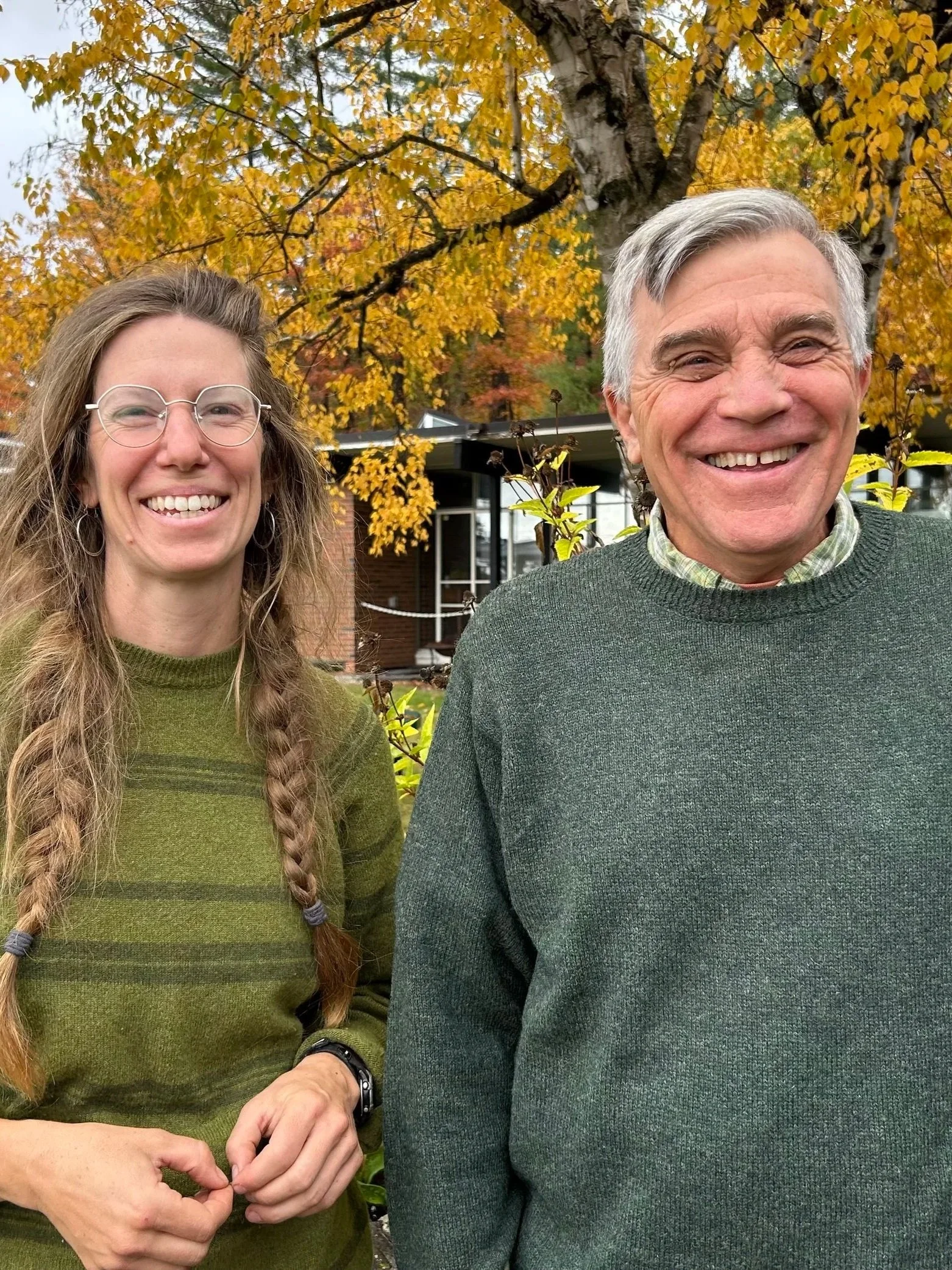
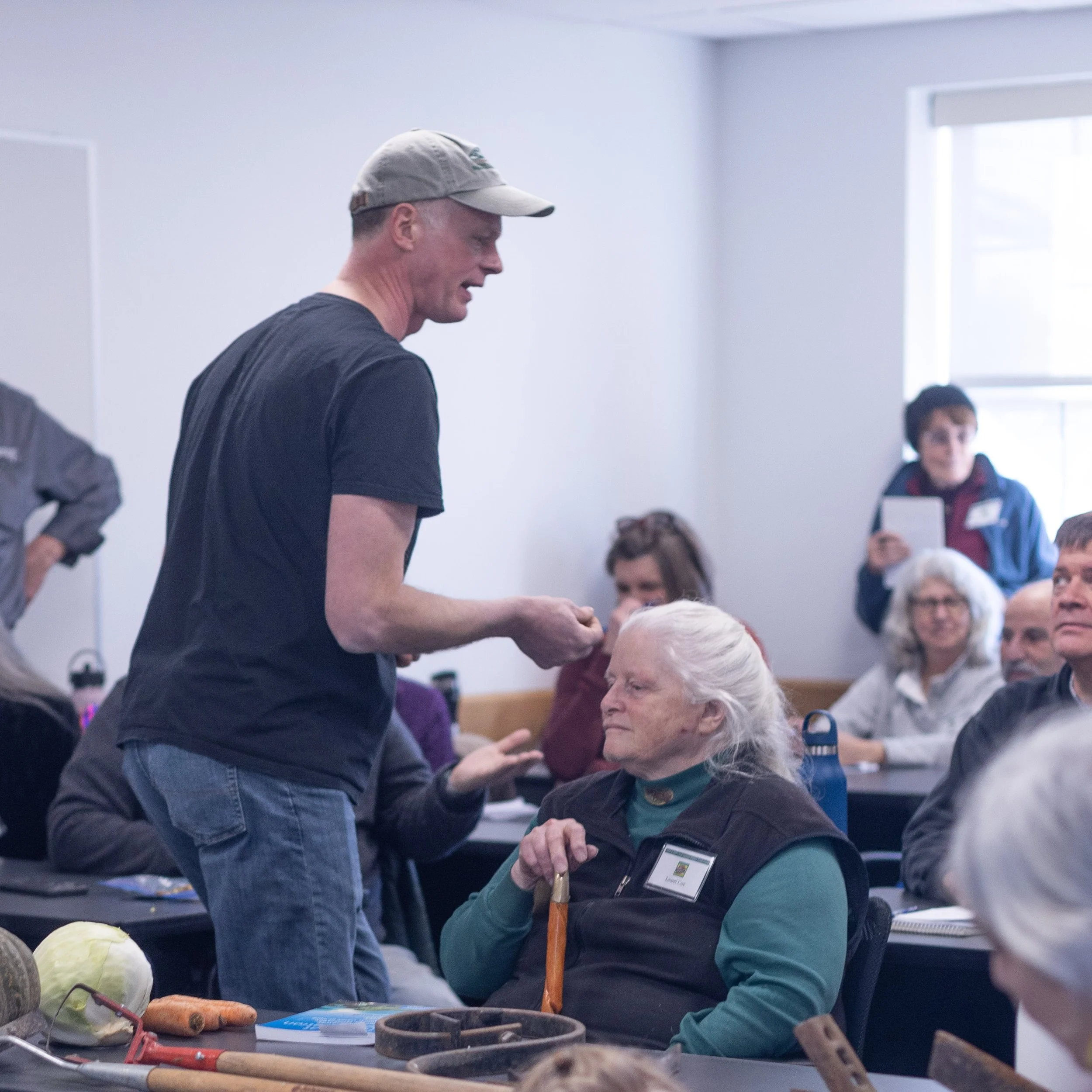
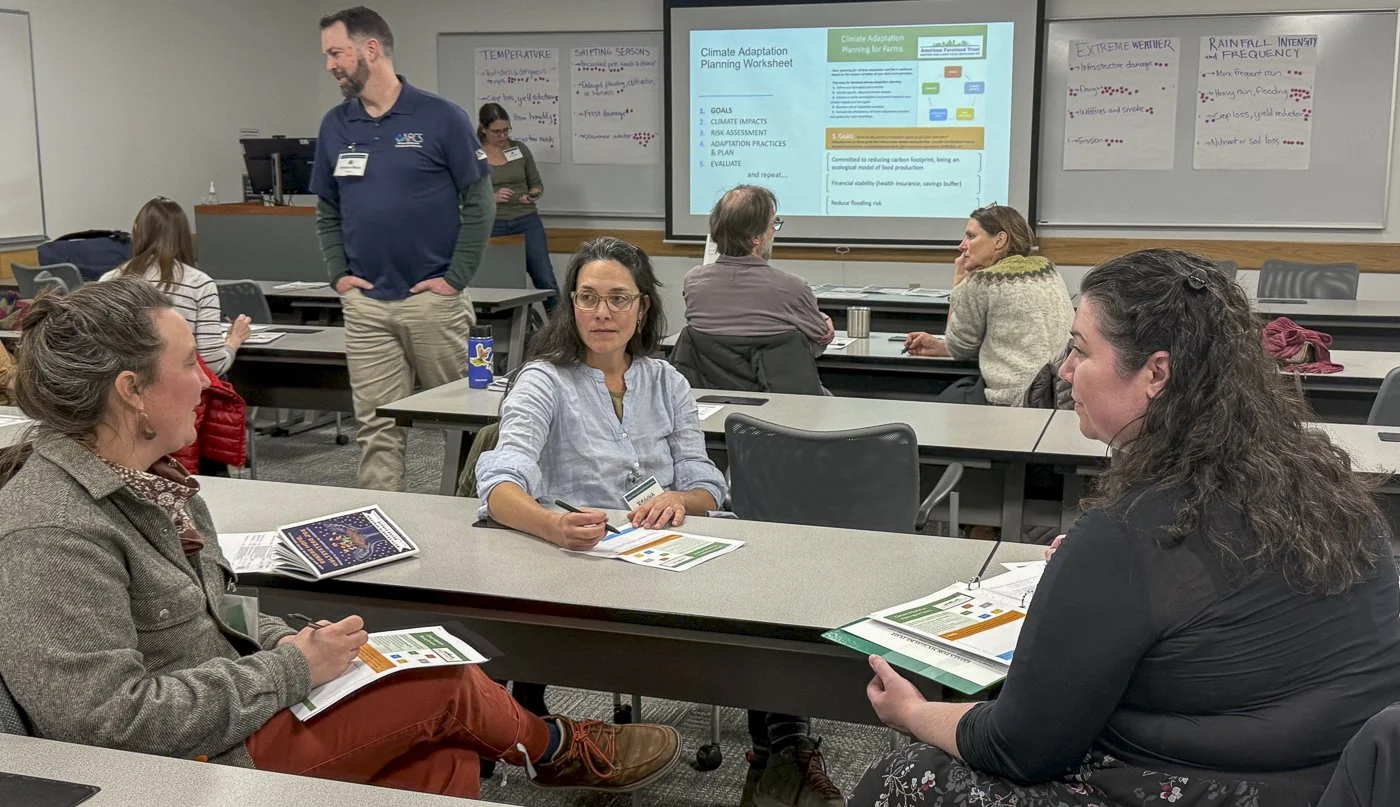
We are excited to introduce David Trumble of Good Earth Farm and Sarah Hansen of Kearsarge Gore Farm as the 2026 Keynote Speakers!
David and Sarah are longtime collaborators in the Local Harvest CSA. Since 2002, this farmer-led program has brought together multiple New Hampshire farms to provide fresh, organic food to communities while supporting one another through shared resources and collective effort. David and Sarah will reflect on the evolution of Local Harvest CSA and share insights from their experiences as organic farmers in New Hampshire. Their conversation will explore what collaboration looks like in practice, how farmers can work together to build resilience, and what it means to move forward as a stronger, more connected agricultural community.
Join us on March 7th to hear from David, Sarah, and all the other inspiring speakers as we celebrate collaboration, community, and the future of sustainable farming in New Hampshire!
Schedule
The schedule for the conference features learning opportunities, meal times together, an exhibitor fair, keynote address and more. Below is a snapshot of what to expect at the event!
Note: The schedule has changed and this is the up to date version
-
Grab some refreshments, visit with exhibitors, and get prepared for the day!
-
Welcome to the event!
-
Choose from a collection of workshops to attend. View the workshop tab for details when they become available.
-
Choose from a collection of workshops to attend. View the workshop tab for details when they become available
-
Enjoy a lunch with everyone and stop by the green market fair to meet with local and regional vendors. Other activities will be available at this time.
-
Choose from a collection of workshops to attend. View the workshop tab for details when they become available
-
Enjoy a panel with everyone in the main meeting room.
-
Celebrate the recipients of the organic community awards. Nominate someone in our community to receive an award via the awards webpage.
-
End the day listening to the events featured speaker(s)